As a fellow in Kode With Klossy's AI BuildLab, sponsored by Codex, I served as product manager and engineer on a team of three, ideating and shipping a product in six weeks. I ran user research and roadmapping, then directed AI coding agents like a technical lead, coding and debugging across the full stack. The result, Kircuit, is a real home base for Klossy alumni across all of their programs.
Kode with Klossy alumni lose touch with each other and the organization after their summer ends.
There's no shared space to keep collaborating, and organizers have no single tool to run community programming beyond emails. As program alumni ourselves, we experienced this fragmentation firsthand.
The Kircuit: A community platform centralizing events, networking, mentorship, and communication for the KWK community
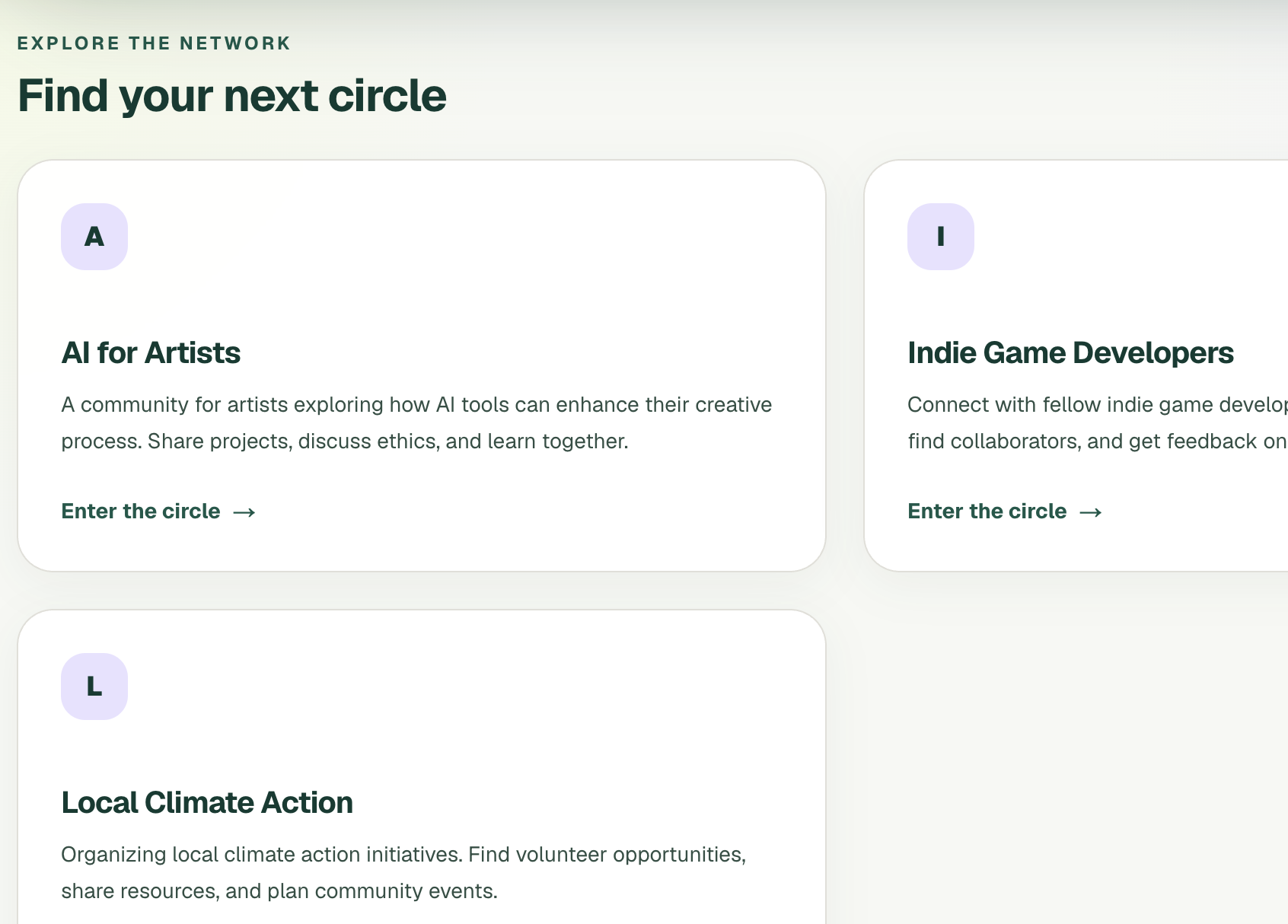
Build community around shared interests
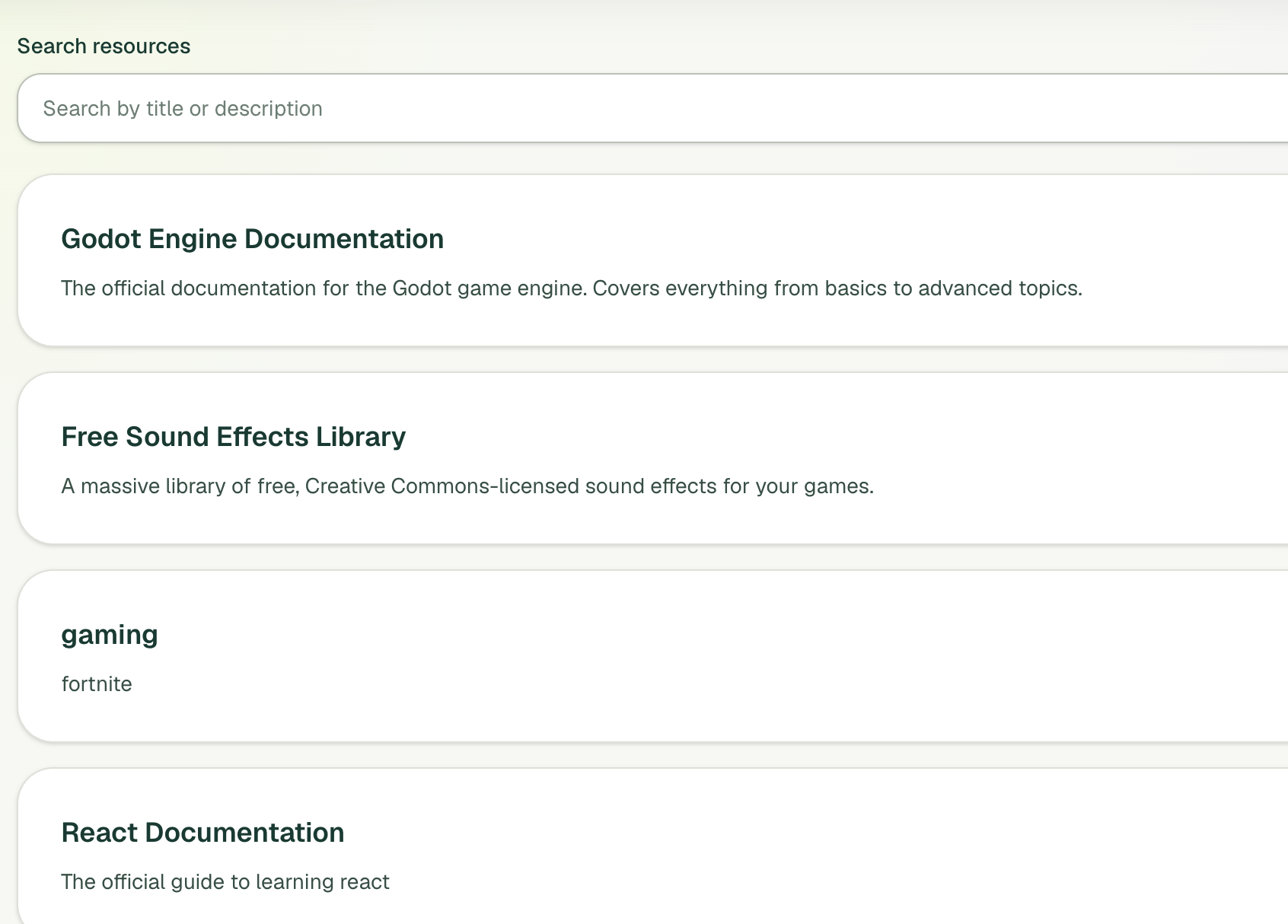
Share resources and opportunities
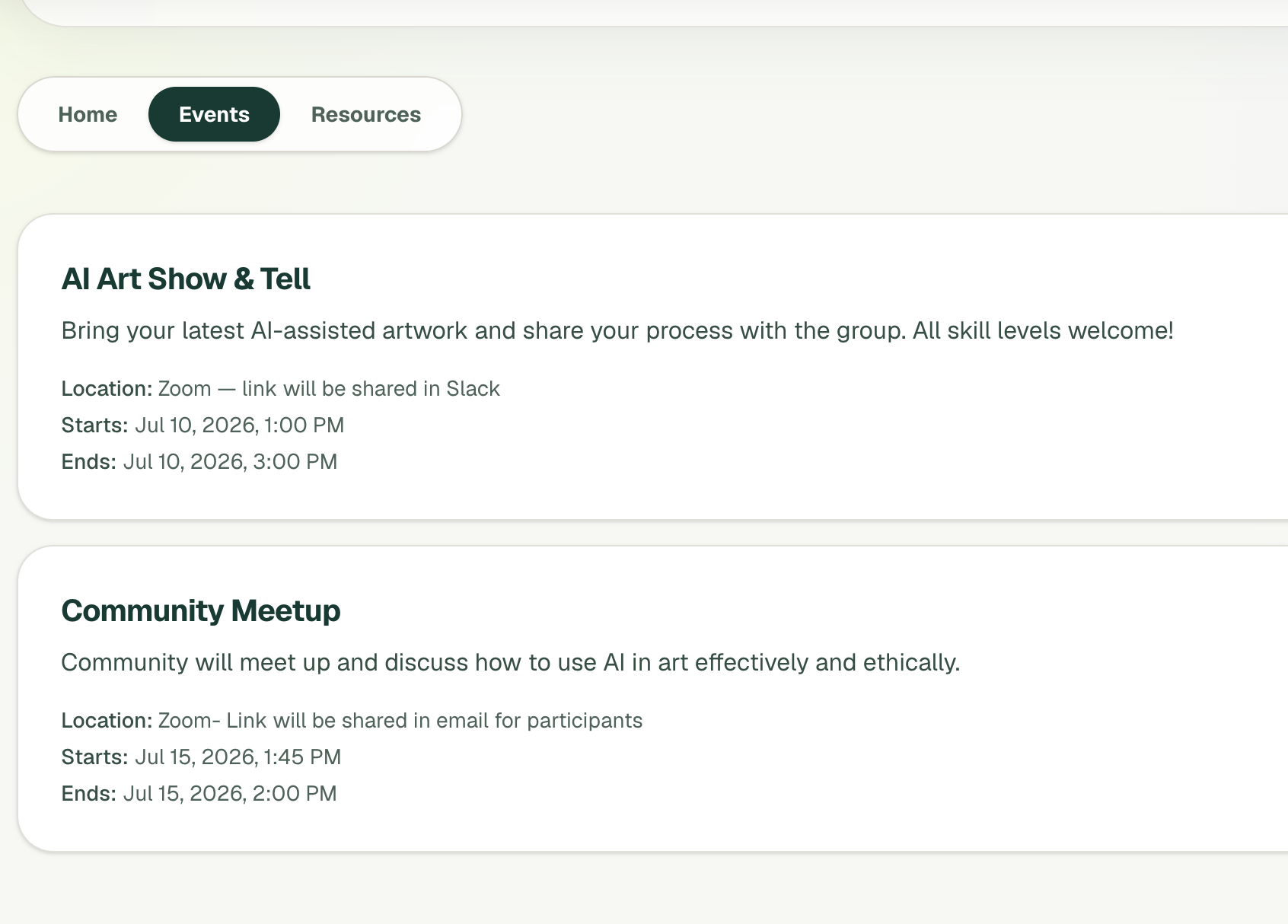
Find events near you
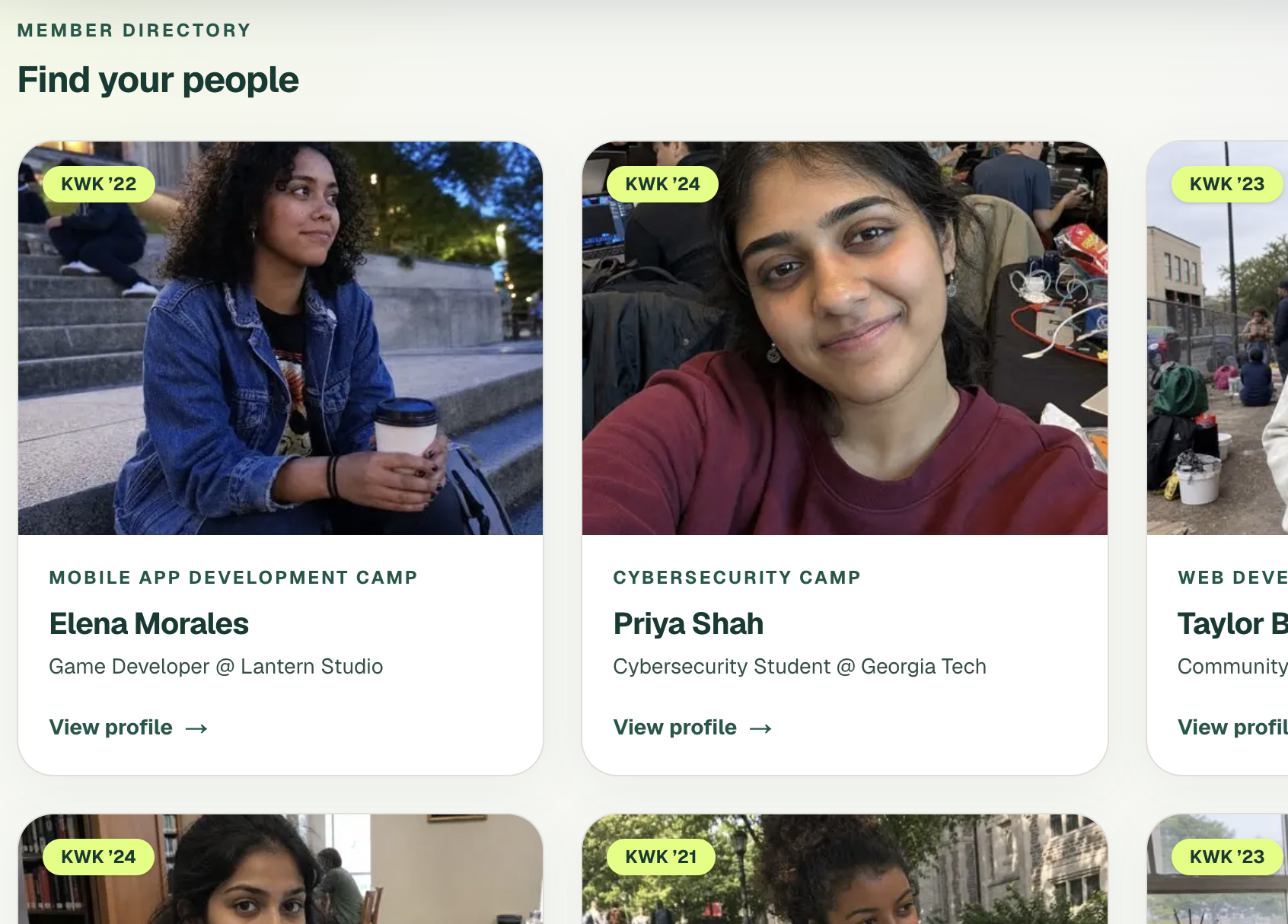
Connect with other Kode with Klossy Alumni
I interviewed users across the Kode with Klossy community. Through 20–30 minute conversations, I uncovered their needs, pain points, and goals. Scroll to see what I learned!
KWK Alum
- Participated in a recent summer program
- Wants to stay connected with friends and mentors
- Struggles to hear about alumni opportunities
“I always find out about events after they've happened.”
Current Scholar
- Looking for mentorship and internship advice
- Wants to connect with alumni in different fields
- Unsure where to find the right people
Recent Graduate
- Wants to expand their professional network
- Interested in job postings and internship opportunities
- Finds it difficult to discover relevant opportunities
I used these findings to develop two user stories.
User Story #1: Maya
Maya is a 20-year-old college student who attended KWK camp three years ago. She still thinks fondly of the friends she made in that cohort, but outside of a few scattered group chats, she's lost touch with most of them and has no idea what the newer cohorts are working on. When she logs into the Hub, she finds a community for alumni in her city, posts a question about a career move, and gets three replies within a day.
User Story #2: Priya
Priya is a KWK program organizer running community engagement for 200+ alumni across five cities. Before the Hub, she managed events and resource-sharing through a patchwork of spreadsheets, email blasts, and Instagram stories that not all alumni saw. Now she creates an event directly in the Hub, and it's instantly visible to every member of the relevant community—no more chasing RSVPs by hand. She spends less time on logistics and more time actually building the connections and support alumni need.
I turned my interview insights into product requirements that prioritized connection and discoverability.
| Product Need | Key Requirements |
|---|---|
| Build Communities | Create public interest-based communities, discover communities from the homepage, and join groups. |
| Enable Discussion | Create posts, ask questions, reply within communities, and participate in discussions. |
| Share Resources | Upload articles, opportunities, and tutorials, and search resources within communities. |
| Support Events | View upcoming events with dates, times, locations, and descriptions, and allow organizers to manage community events. |
| Member Directory | Browse member profiles, search members by name or interests, and connect with alumni, peers, and mentors. |
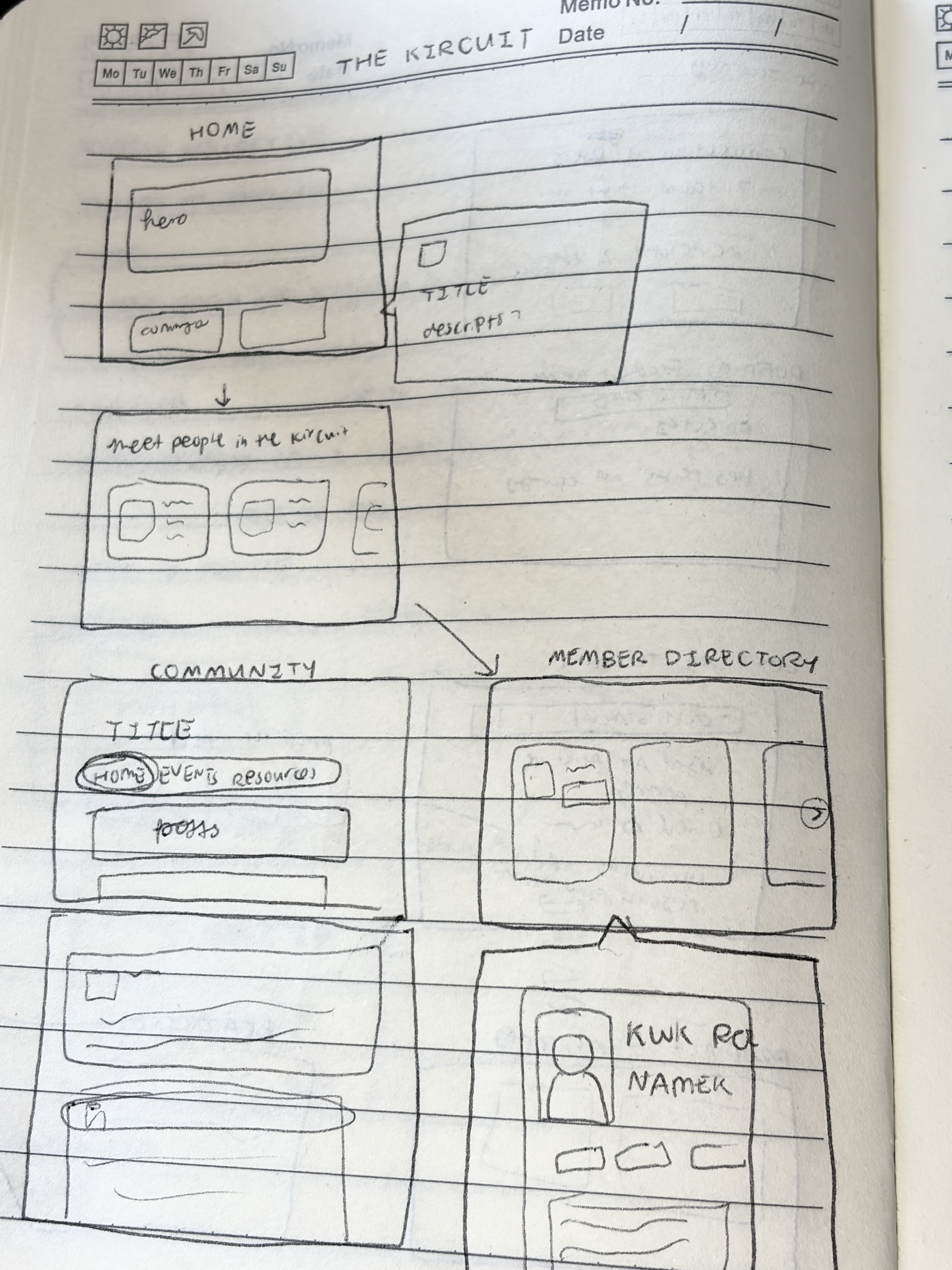
Prototyping in my journal
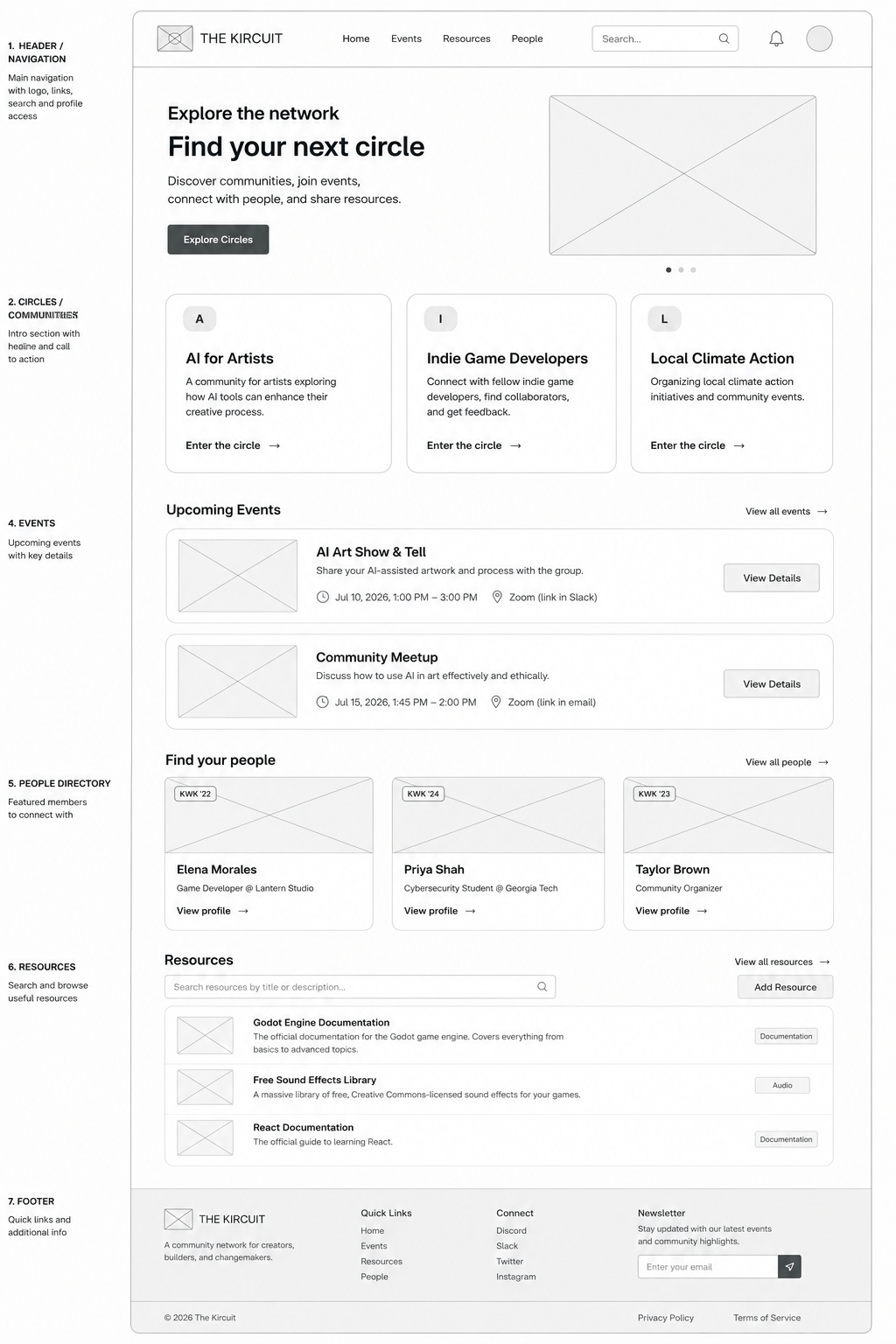
Wireframing in Figma
Let's develop this thing!
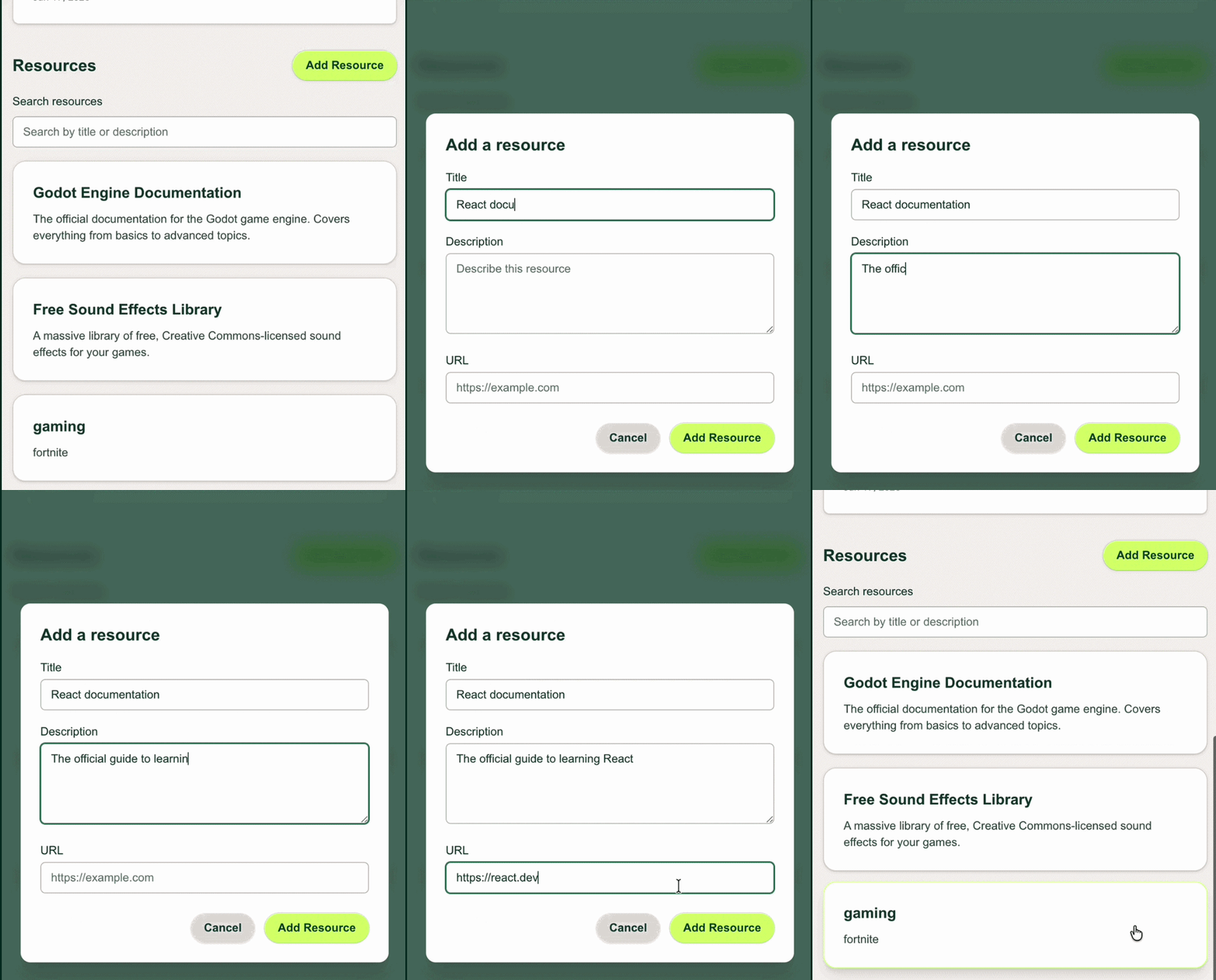
Through BuildLab, I developed a strong foundation in AI-first development, learning best practices for prompting, testing, and tracing feature workflows. In this example, when an alumna shares a resource with her community, the request flows through the full stack:
-
Open form
The community page renders
NewResourceForm, a client-side React component. -
Submit
On submission, the form converts its data into JSON and sends a POST request to the
/api/resourcesroute handler. -
Validate
Try-catch blocks validate required fields, ensure the URL is valid, and query the database to verify the specified community exists.
-
Save
Drizzle ORM inserts the resource into the PostgreSQL "resources" table.
-
Refresh
router.refresh()reloads the server data to display the newly added resource.
To deliver a usable MVP within our timeline, I focused on solving the community's most critical needs before expanding into engagement features.
Depth > BreadthTradeoff
I prioritized publishing posts, sharing resources, and organizing events over features like notifications, private messaging, and recommendation algorithms.
Impact
This kept the MVP focused and let us validate the community's core value proposition before investing in additional social features as the user base grows.
Here's what I'm taking away.
Constraints make a product better, not worse.
Every feature I cut didn't have a clear enough scope to survive my initial vision for the product. Learning to say no early forced me to interrogate what our users actually needed and identify what features would really add value.
Product and engineering are not separate disciplines.
Writing the PRD and prompting the AI coding agent were part of the same job, not separate ones. Knowing what to build and how to scope it well mattered just as much as knowing how to code it.