As a member of the Town of Normal Youth Council, I built RecycleRight, an ML-powered web app that helps users correctly sort recyclables and find nearby disposal options. I owned the project end-to-end, from training a custom machine learning model to 95% accuracy to developing and deploying the application. After presenting it to the Town Council, RecycleRight was adopted by the McLean County Ecology Action Center and has more than 600+ user uploads to date.
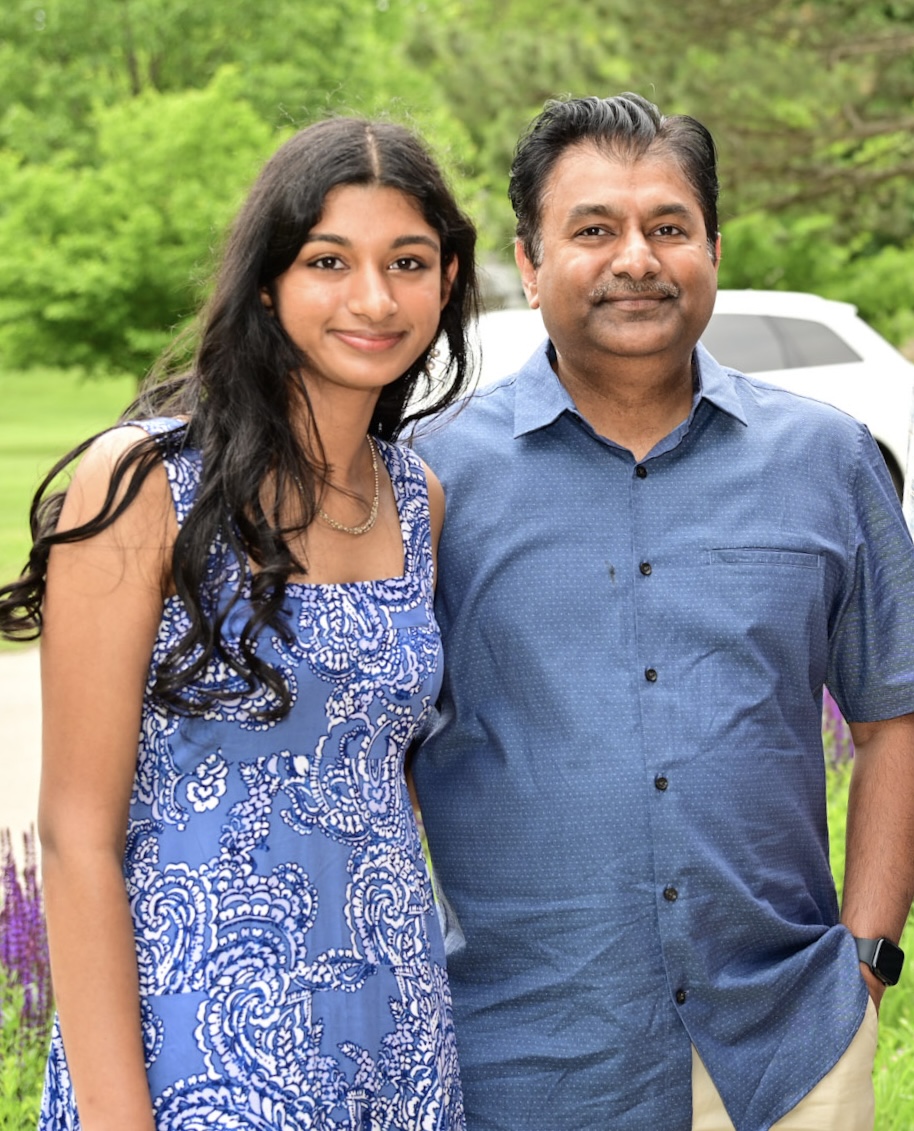
This is my dad!
Like most parents, he doesn't like to waste. Growing up, I noticed how much effort he went through to research how to properly dispose of everyday items like pizza boxes and plastic bags. It's a habit I've inherited, and we're not alone.
A 2025 survey from The Harris Poll found that while nearly 90% of Americans think that recycling is important, household recycling rates remain at just 32%—largely due to confusion around proper recycling practices. For example, many people don't know that pizza boxes with grease can't be recycled, or that plastic bags cannot be recycled curbside.
I created RecycleRight to help not just my dad, but everyone who wants to recycle correctly without the confusion or endless Googling.
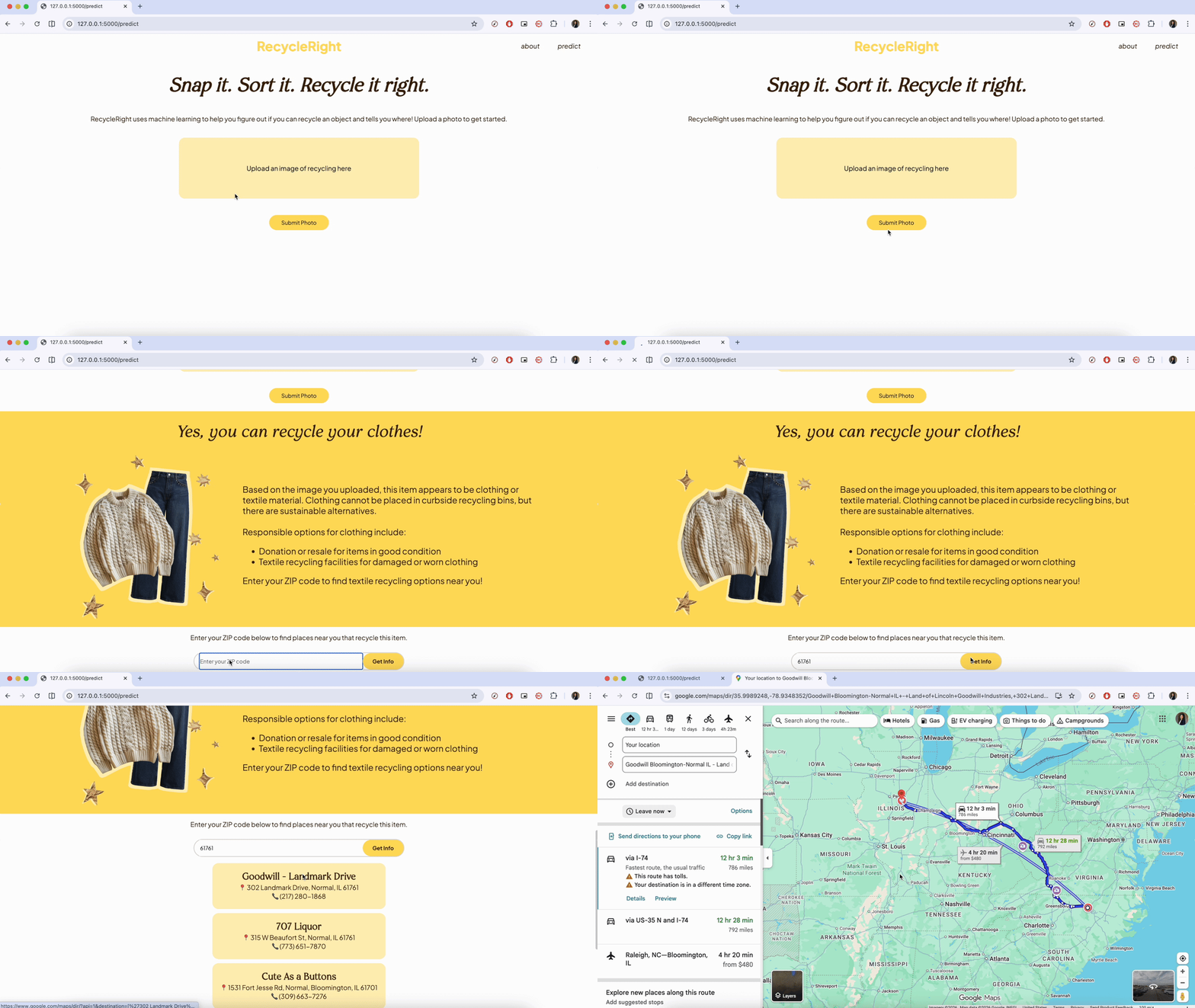
RecycleRight is an ML-powered app that helps users correctly sort recyclables and find nearby disposal options.
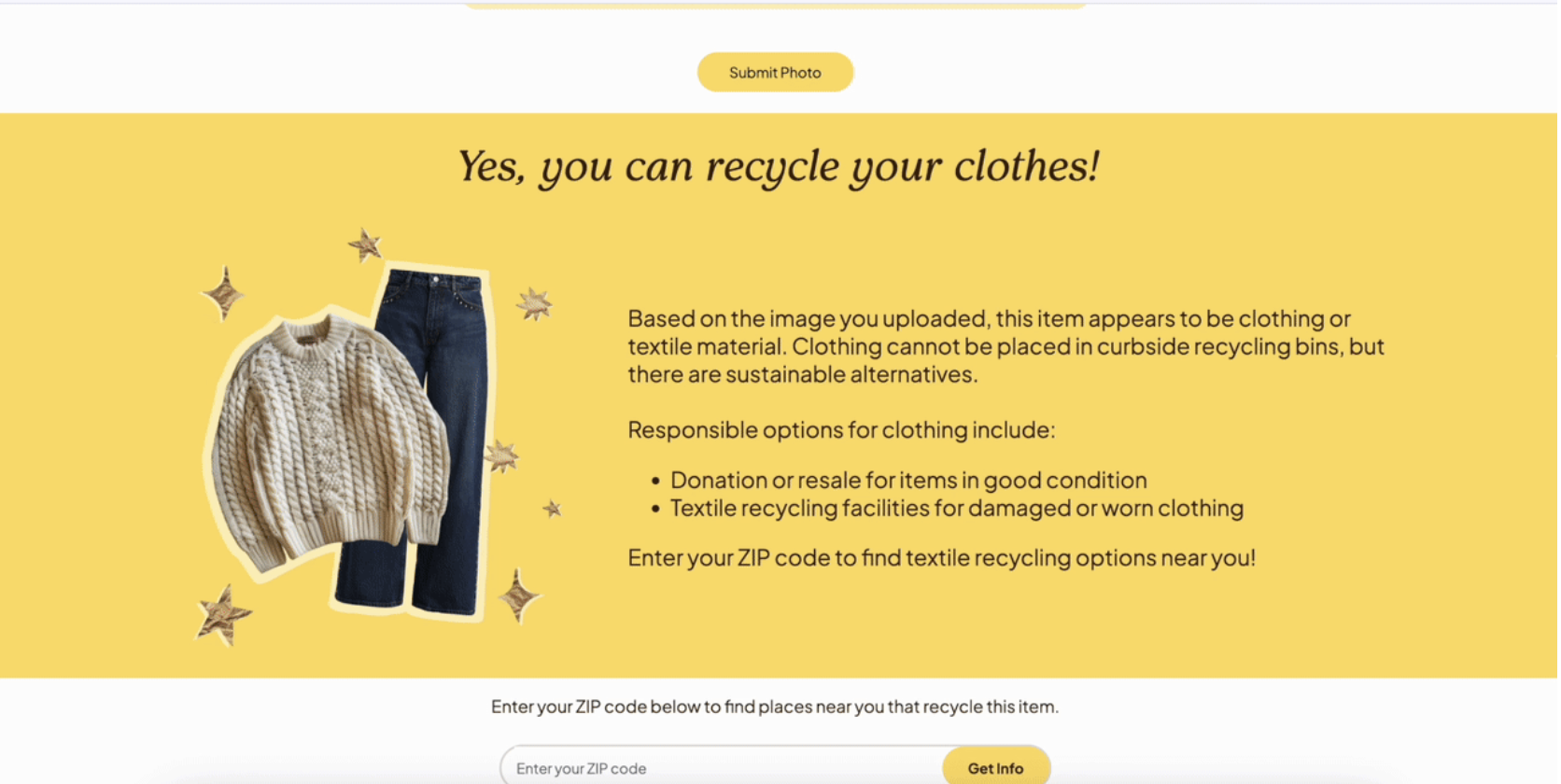
Simply upload a photo of an item you're unsure how to recycle, and RecycleRight will tell you whether it's recyclable and how to dispose of it properly. Then, enter your zip code to get a list of nearby drop-off locations and facilities.
RecycleRight provides relevant, location-based information for everything from batteries to clothing to household food waste.
Getting close to the problem was key.
As part of this project through my town's Youth Council, I toured local waste management and recycling facilities to conduct firsthand user research. While conducting interviews and observing how the system operates in practice, I learned that when items are mis-sorted, facility workers have to painstakingly manually remove them, which slows processing and increases costs. The research shaped several key product decisions, from a photo-first interface to clear, actionable disposal instructions designed to eliminate guesswork.
The real work began once I started building.
This was my first time training a machine learning model. I made the decision to compile and label a custom dataset of common household items because no existing dataset captured the categories and disposal methods RecycleRight needed to support.
Then, I began fine-tuning a ResNet50 convolutional neural network to classify images of recyclables into disposal categories. It was rough at first…
Training loss 2.10434 | Training accuracy: 27.44141
Testing loss 2.13891 | Testing accuracy: 23.21429
But after many (many) batches and experimenting with hyperparameters like preprocessing and training step sizes, I got my model up to 95% testing accuracy!
Batch 505
Training loss 0.08152 | Training accuracy: 97.71492
Testing loss 0.12933 | Testing accuracy: 95.71850
Check out my Colab Notebook and PyTorch Model!
The most challenging part of building RecycleRight was learning how to integrate the front and back end with Flask, since this was my first time deploying a full-stack ML application. I used Flask to integrate the model with a clean, beautiful front end. My goal was to make the page as intuitive as possible to encourage everyday use!
Here's what I'm taking away.
Real-world problems are messier than technical ones.
Building the model was challenging, but understanding recycling rules, regional differences, and how people actually dispose of waste was more challenging—but also what made this tool valuable.
Better data often matters more than better models.
Collecting and labeling a quality dataset myself had a greater impact than trying increasingly complex architectures.